
The ‘ISLE HFpEF’ project, which will receive a £225,000 grant, is a clinical trial that aims to address a critical health challenge in Jersey: heart failure with ‘preserved ejection fraction’ (HFpEF), a complex condition that is difficult to diagnose and has limited treatment options. Cardiovascular diseases accounted for 27% of deaths in Jersey in 2024.
The two-year project, a collaboration between Jersey General Hospital and the University of Oxford, will feature a wearable-based digital monitoring system, including a ‘motion accelerometer patch’ that tracks a patient’s physical activity, and a smart ring that monitors physiological data such as heart rate and heart rate variability.
Combined, these technologies can help enable early detection of heart failure and provide ongoing monitoring to assess a patient’s reaction to treatment, whilst also providing valuable insights for further research. In particular, the project is looking to get a clearer understanding of the impact of iron in the bloodstream in treating this specific condition – an area identified by the UK’s National Institute for Health and Care Excellence (NICE) as a research priority.
Meanwhile, the IslandView initiative, which will receive a grant of almost £487,000, will create an open digital dataset for Jersey’s road network and built environment. The 12-month project will deliver up-to-date high-resolution street-level imagery through a series of comprehensive surveys of the Island’s road network using a ‘Jersey Capture Vehicle’, whilst also providing an independent, current dataset of 4G and 5G coverage across the Island.
Acknowledging that current imagery and data is outdated and fragmented, IslandView will help improve evidence-based decision-making and planning, reduce costs in the local architecture, engineering and construction sectors, support the visitor economy, enhance transparency in telecom performance, and lay the groundwork for emerging technologies and infrastructure. The team behind the project are all originally from Jersey and bring diverse specialist expertise gained off-island, including in robotics, hardware engineering, data science, and software product development, all focused on the built environment, and the architecture, engineering and construction (AEC) sector.
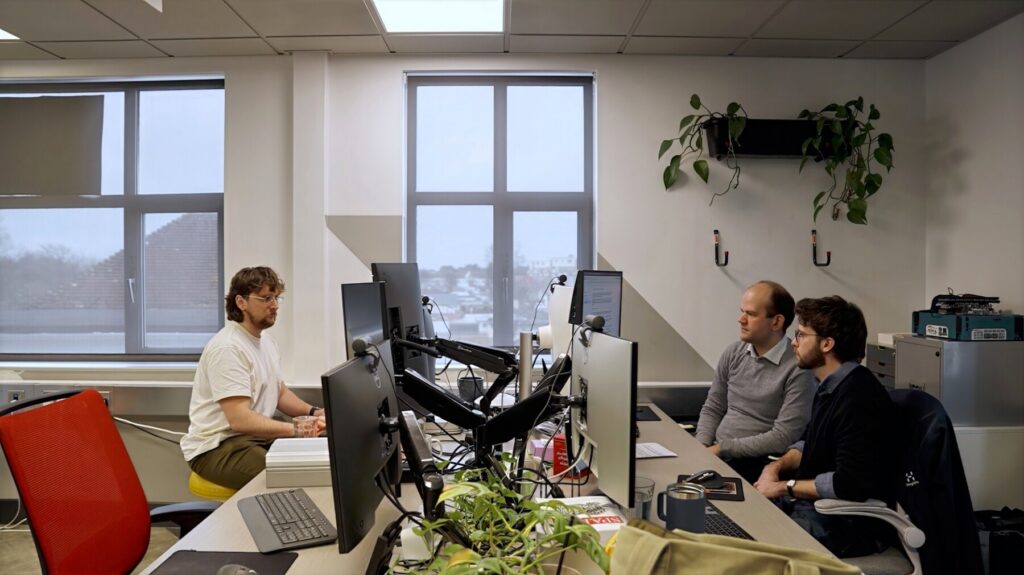
Together, ISLE HFpEF and IslandView are the first projects to be approved for funding through the Impact Jersey ‘Innovation Programme’ after its launch last summer. Following on from the CareTech and CXTech Challenge programmes, the Innovation Programme is a rolling funding opportunity, aimed at accelerating innovation by funding pilot projects, proofs of concept and scalable solutions that align with Jersey’s strategic priorities.
Commenting on the ISLE HFpEF project, Aaron Henry, Cardiology Doctor at the Jersey General Hospital, said:
“Being able to use digital wearable technologies has the potential to provide a much more accurate picture of a patient’s situation, ultimately providing better outcomes for them whilst also reducing healthcare costs. This is particularly important in Jersey which, as a small island, faces additional constraints, making innovative approaches like this absolutely essential. This project represents an exciting opportunity for Jersey to become a world leader in digital health technologies and revolutionise how we undertake cardiology trials.”
Gary Edwards, Director at re.je – the business behind IslandView, said:
“Jersey’s existing digital representation of its roads and built environment is quite out of date. To address this, we’ve developed a specialist vehicle equipped with cameras, laser scanners and highly accurate positioning technologies that can give us a modern, up-to-date, data set. The aim is to support future innovation on the island and help position Jersey as an advanced jurisdiction for the development of emerging technologies such as AI and digital twins.”
Tony Moretta, CEO, Digital Jersey, added:
“I’m really pleased that the first grants through Impact Jersey’s Innovation Programme have been approved, to support projects that, between them, have the potential to demonstrate the power of digital technologies in advancing our approach to healthcare, and in supporting multi-sector economic growth. We are looking forward to seeing both projects as they evolve over the coming months.”